Running a small business requires more than selling products or providing services. Business owners also need to understand how much money their companies actually earn. A business may generate high sales but still struggle financially because its expenses are too high.
Learning how to calculate profit margin for a small business helps you understand your financial performance. It shows how much profit remains from every dollar of revenue after covering business costs.
Whether you operate an online store, a local shop, or a service-based company, knowing your profit margin can help you make smarter financial decisions.
What Is Profit Margin?
Profit margin is the percentage of revenue that remains as profit after subtracting expenses. It helps business owners measure how efficiently they manage their money.
For example, imagine your small business generates $10,000 in monthly revenue. After paying all relevant expenses, you have $2,000 remaining as profit.
Your profit margin is 20%.
This means your business keeps 20 cents in profit for every dollar earned.
A higher profit margin generally indicates better profitability. However, the ideal margin depends on your industry, operating costs, and business model.
How to Calculate Profit Margin for a Small Business
Calculating profit margin is easier than many business owners expect. You only need two basic figures: profit and total revenue.
Use this formula:
Profit Margin = (Net Profit ÷ Total Revenue) × 100
Let’s understand how it works with a simple example.
Suppose your business earns $15,000 in monthly revenue. Your total business expenses are $12,000.
First, calculate your net profit:
$15,000 – $12,000 = $3,000
Next, divide your net profit by total revenue:
$3,000 ÷ $15,000 = 0.20
Finally, multiply the result by 100:
0.20 × 100 = 20%
Your business has a 20% net profit margin.
This calculation gives you a clear picture of how much revenue your business converts into actual profit.
Understand the Three Main Types of Profit Margin
Small business owners should understand three important profit margin measurements. Each one provides different information about financial performance.
1. Gross Profit Margin
Gross profit margin measures how much money remains after subtracting the direct costs of producing or purchasing products.
These costs are commonly called the cost of goods sold (COGS).
The formula is:
Gross Profit Margin = (Gross Profit ÷ Revenue) × 100
For example, if your business generates $10,000 in sales and spends $4,000 on products, your gross profit is $6,000.
Your gross profit margin is 60%.
This measurement helps you understand product pricing and direct production costs.
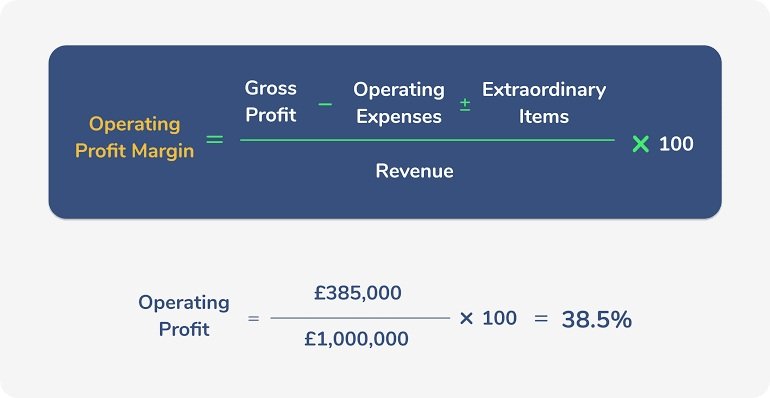
2. Operating Profit Margin
Operating profit margin measures the profit remaining after covering regular operating expenses.
These expenses may include employee salaries, rent, utilities, advertising, and office supplies.
The formula is:
Operating Profit Margin = (Operating Profit ÷ Revenue) × 100
For example, if your operating profit is $2,500 and revenue is $10,000, your operating profit margin is 25%.
It helps you evaluate how efficiently your business manages daily operations.
3. Net Profit Margin
Net profit margin measures the percentage of revenue remaining after all relevant expenses, including interest and taxes.
The formula is:
Net Profit Margin = (Net Profit ÷ Revenue) × 100
For example, if your business earns $10,000 and has $8,500 in total expenses, your net profit is $1,500.
Your net profit margin is 15%.
This is an important measurement because it shows how much money your business actually keeps.
Example of a Small Business Profit Margin Calculation
Consider a small online store with the following monthly financial figures:
| Financial Item | Amount |
|---|---|
| Total Revenue | $12,000 |
| Product Costs | $4,000 |
| Operating Expenses | $5,000 |
| Taxes and Interest | $1,000 |
| Net Profit | $2,000 |
Using the net profit margin formula:
($2,000 ÷ $12,000) × 100 = 16.67%
The business has a net profit margin of approximately 16.67%.
This means the company keeps around 16.67 cents from every dollar of revenue after accounting for the listed expenses.
How to Improve Your Small Business Profit Margin
Calculating your profit margin is only the first step. The next goal is to improve it over time.
Here are some practical ways to increase profitability.
Review Your Business Expenses
Start by checking your monthly expenses. Look for unnecessary subscriptions, expensive services, and avoidable costs.
Even small savings can improve your overall profitability.
Set the Right Product Prices
Your prices should cover product costs, operating expenses, and your desired profit.
Research competitors and understand customer expectations before changing your prices.
Reduce Inventory Waste
Poor inventory management can increase business costs. Track product demand and avoid purchasing more stock than you can reasonably sell.
Focus on Profitable Products
Some products generate higher margins than others. Identify your best-performing items and focus on improving their sales.
Monitor Financial Performance
Review your revenue, expenses, and profit margins every month. Comparing financial results over time helps you identify problems before they become serious.
Common Profit Margin Calculation Mistakes
Business owners sometimes make mistakes when calculating profit margins.
One common mistake is confusing profit with revenue. Revenue represents total sales, while profit is the money remaining after expenses.
Another mistake is ignoring indirect costs. Rent, salaries, marketing, and other operating expenses can significantly affect profitability.
Some owners also confuse profit margin with markup. Profit margin measures profit as a percentage of selling revenue, while markup measures profit relative to cost.
Understanding these differences helps you make more accurate financial decisions.
Final Thoughts
Learning how to calculate profit margin for a small business is essential for managing finances and building a sustainable company.
By understanding gross, operating, and net profit margins, you can identify how efficiently your business uses its revenue.
Use the correct formulas, track expenses regularly, and review your financial performance every month.
Most importantly, do not focus on sales alone. A successful small business needs healthy profits, controlled expenses, and a clear understanding of its financial position.