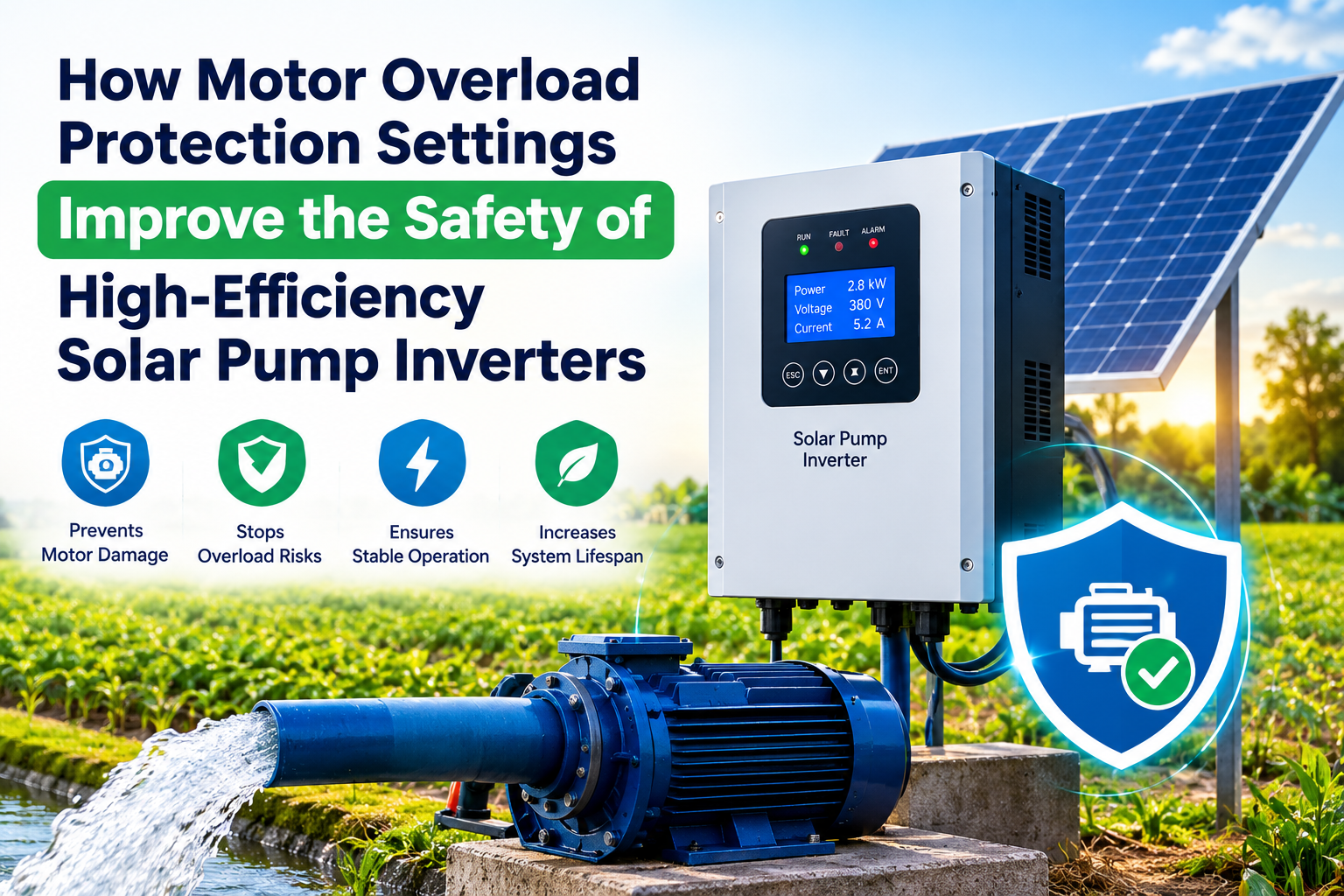
High-efficiency solar pump inverters help convert solar energy into useful power for water pumping systems. They can improve energy use, control motor speed, and support reliable irrigation. However, the motor connected to an inverter can face excessive load during demanding operating conditions. Without proper protection, this can lead to overheating, higher energy consumption, and motor damage.
Motor overload protection settings are designed to reduce these risks. When configured correctly, they help the inverter monitor the motor and respond when the load becomes too high. This article explains how motor overload protection settings improve the safety and reliability of high-efficiency solar pump inverters.
What Is Motor Overload Protection?
Motor overload protection is a safety feature that helps protect an electric motor when it operates above its suitable load level.
A solar pump inverter monitors electrical conditions such as current, voltage, motor speed, and operating status. If the motor draws excessive current for a certain period, the inverter can trigger a warning, reduce output, or stop the motor depending on its configuration.
This protection is important because an overloaded motor can generate excessive heat. Continued operation under these conditions may reduce motor efficiency and shorten its service life.
Why Solar Pump Motors Can Experience Overload
Solar pumping systems operate under changing environmental and mechanical conditions. Solar power can vary throughout the day because of clouds, temperature, and sunlight intensity.
Mechanical problems can also increase the motor load. Common causes include blocked pipes, damaged pumps, restricted water flow, incorrect pump sizing, or excessive pumping pressure.
If these conditions are not detected, the motor may continue working harder than intended. Proper overload protection gives the inverter a way to respond before the problem becomes more serious.
How Overload Settings Protect the Motor
The inverter uses programmed protection parameters to determine when the motor is operating outside its safe range.
One important parameter is the motor’s rated current. This value should normally match the motor manufacturer’s specifications. If the current remains above the configured limit for too long, the inverter may activate overload protection.
The response can vary between systems. Some inverters provide an alarm first, while others reduce motor speed or stop the motor completely.
This helps prevent prolonged overheating and reduces the possibility of serious motor damage.
Preventing Excessive Heat
Heat is one of the major concerns when an electric motor operates under excessive load.
When the motor draws more current, its internal components can produce additional heat. If the condition continues, insulation and other motor components may deteriorate.
Correct overload protection settings help limit the time the motor operates under excessive electrical stress. This can contribute to more stable operation and better long-term reliability.
Improving System Reliability
A high-efficiency solar pump inverter does more than convert electrical power. It can also manage motor operation and provide important protection functions.
When overload protection is configured correctly, the system can respond to abnormal conditions automatically. This reduces the need for immediate manual intervention and can help prevent unexpected equipment failures.
Reliable protection is especially valuable in agricultural and remote pumping applications where regular monitoring may not always be possible.
Choosing the Correct Overload Settings
Overload settings should not be selected randomly. The correct values depend on the motor, pump, inverter, and application.
Always check the motor nameplate and manufacturer documentation before changing protection parameters. Important information may include rated current, rated voltage, frequency, power, and operating speed.
The inverter manual should also be followed because different models use different protection parameters and control methods.
Setting the protection level too high may reduce the effectiveness of overload protection. Setting it too low may cause unnecessary shutdowns during normal operation.
The Role of Current and Motor Load
Current monitoring is an important part of overload protection. As the motor load increases, its electrical demand can also increase.
The inverter can use current information to identify abnormal operating conditions. However, current alone should not be considered the only factor when configuring a system.
Pump characteristics, motor specifications, operating conditions, and inverter settings should all be considered together.
[Improve Solar Pump Motor Protection] by using correctly configured overload settings based on the manufacturer’s specifications.
Benefits for High-Efficiency Solar Pump Systems
Correct overload protection can provide several benefits for solar pumping systems:
- Helps prevent motor overheating
- Reduces the risk of motor damage
- Supports stable pump operation
- Helps detect abnormal load conditions
- Can reduce unexpected shutdown-related problems
- Supports longer equipment service life
- Improves overall system reliability
These benefits make overload protection an important part of a properly designed solar pumping system.
Regular Maintenance Still Matters
Protection settings cannot replace regular maintenance. Operators should inspect pumps, motors, cables, pipes, and other components regularly.
Blocked filters, damaged bearings, restricted water flow, loose electrical connections, and other faults can increase motor load.
If an inverter repeatedly reports an overload condition, do not simply increase the overload limit. Find and correct the underlying problem first.
Conclusion
Understanding how motor overload protection settings improve the safety of high-efficiency solar pump inverters is important for maintaining reliable pumping equipment. Correct settings help the inverter respond when a motor experiences excessive load and can reduce the risk of overheating and damage.
For the best results, protection parameters should always be configured according to the motor and inverter manufacturer’s specifications. Combined with regular maintenance and proper system sizing, overload protection can help solar pump systems operate more safely, efficiently, and reliably over the long term.